
Mento Music
Mento Genre
Mento music emerged as a distinct style of Jamaican music in the early part of the 1900s, although its roots run much deeper. Mento, much like other Caribbean folk music, is a blending of African rhythms, Latin rhythms, and Anglo folksongs. Mento found its greatest popularity in the 1940s and 1950s in Jamaica, before Rocksteady and Reggae became the predominant musical styles. Mento has greatly influenced ska and reggae music.
Instrumentation
Mento music is often played on "folk instruments", versus the predominant horns and electric instruments that came to dominate later Jamaican musical styles.
Often a band will consist of an acoustic guitar, a banjo, a gourd shaker, hand drums and a "rumba box" (a large, bass-register mbira, or thumb piano, played by sitting on the box and striking metal "flappers" which are attached). The rhumba box carries the bass part of the music. Other common instruments are upright bass, fiddle, mandolin, ukulele, and trumpet.
Mento Music Today
Many American tourists in Jamaica get their first taste of Jamaican music through Mento, as the Jamaican government funds mento bands to play in the airports and on tourist beaches. However, recordings of the music are very uncommon and can be hard to find, as record labels prefer better-selling reggae and dub records.
Jamaican Calypso
Mento music is often referred to as Jamaican Calypso, although the rhythms and song patterns are markedly different from those of Trinidadian Calypso.
Mento is often confused with calypso, a musical form from Trinidad and Tobago.
During the mid-20th century, mento was conflated with calypso, and mento was frequently referred to as calypso, kalypso and mento calypso.[2] Mento singers frequently used calypso songs and techniques. As in calypso, mento uses topical lyrics with a humorous slant, commenting on poverty and other social issues. Sexual innuendos are also common.
Song Lyrics
While many mento songs are about traditional "folksong" subjects, from political commentary to simple day-to-day life, a disproportionately large number of the songs are "bawdy songs", often featuring poorly-veiled (and delightfully funny) sexual double-entendres.
Popular mento songs include references to "Big Bamboo", "Juicy Tomatoes", "Sweet Watermelon", and so on
History
Mento draws on musical traditions brought by West African slaves. They also absorbed European musical traditions, creating a new form. Slaves who could play musical instruments were often required to play music for their masters and often rewarded for such skills. The Africans created a creole music, incorporating such elements of these traditons, including quadrille, into their own folk music.
The Jamaican mento style has a long history of conflation with Trinidadian calypso. The lyrics of mento songs often deal with aspects of everyday life in a light-hearted and humorous way. Many comment on poverty, poor housing, and other social issues. Thinly veiled sexual references and innuendo are also common. Mento can be seen as a precursor of some of the movement motifs and themes dealing with such social issues found in modern dancehall. It became more popular in the late 1940s, with mento performances becoming a common aspect of dances, parties and other events in Jamaica.
Major 1950s mento recording artists include Louise Bennett, Count Lasher, Harold Richardson, Lord Flea, Lord Fly, Alerth Bedasse with Chin's Calypso Sextet, Laurel Aitken, Denzil Laing, Lord Composer, Lord Lebby, Lord Power, Hubert Porter, and Harry Belafonte, a New Yorker of Jamaican origin. His wildly popular hit records in 1956-1958, including "Day-O (The Banana Boat Song)" and "Jamaica Farewell," were mento songs sold as calypso. Previously recorded Jamaican versions of many Belafonte's classic "calypso" hits can be heard on the Jamaica - Mento 1951-1958 CD released by Frémeaux & Associés in 2009.
Due in part to Belafonte's popularity, mento became widely conflated with calypso in the 1950s. In a 1957 interview for Calypso Star magazine, Lord Flea explained:
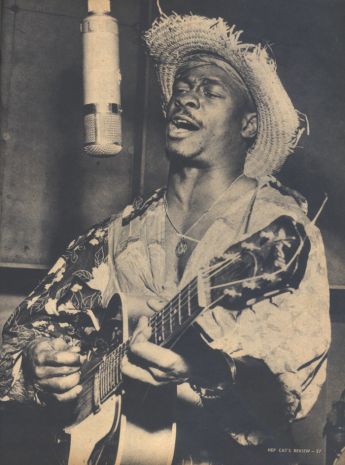
"In Jamaica, we call our music 'mento' until very recently. Today, 'calypso' is beginning to be used for all kinds of West Indian music. This is because it's become so commercialized there. Some people like to think of West Indians as carefree natives who work and sing and play and laugh their lives away. But this isn't so. Most of the people there are hard working folks, and many of them are smart business men. If the tourists want "calypso", that's what we sell them."Lord Flea
This was the golden age of mento, as records pressed by Stanley Motta, Ivan Chin, Ken Khouri and others brought the music to a new audience. In the 1960s it became overshadowed by ska and reggae. Mento is still played in Jamaica, especially in areas frequented by tourists. Lloyd Bradley, reggae historian and author of the seminal reggae book, Bass Culture, said that Lee "Scratch" Perry’s seminal 1976 dub album, Super Ape, contained some of the purest mento influences he knew. This style of music was revived in popularity by the Jolly Boys in the late 1980s and early 1990s with the release of four recordings on First Warning Records/Rykodisc and a tour that included the United States. Stanley Beckford and Gilzene and the Blue Light Mento Band also revived rural mento in the 2000s. The mento dance is a Jamaican folk-form dance with acoustic guitar, banjo, hand drums and rhumba box.
Mento is a vibrant and significant genre of music. It has a very long history and is still performed today. Mento was crucial in the formation of ska and reggae, yet, for the world-wide masses of ska and reggae fans, mento is largely unheard and unknown.
Popular Vintage mento on CD
Starter CDs
The Jolly Boys: Pop 'n' Mento
Various Artists: Boogu Yagga Gal - Jamaican Mento from the 1950s
Various Artists: Mento Madness - Motta's Jamaican Mento 1951-1956
The Overtakers: More Reali
Vintage mento on CD
- Boogu Yagga Gal - Jamaican Mento 1950s (Heritage, 2001)
- Trojan Calypso Box Set (Trojan, 2002)
- Mento Madness - Motta's Jamaican Mento: 1951-56 (V2, 2004)
- Dip & Fall Back Dr. Kinsey To Haile Selassie - Classic Jamaican Mento (Trojan, 2006)
- Take Me To Jamaica - The Story Of Jamaican Mento From 1951 To 1958 (Pressure Sounds, 2006)
- The Trojan Calypso Collection (Trojan, 2009)
- Jamaica-Mento 1951-1958 (Frémeaux & Associés, 2009)
- Trojan Presents Mento & R&B - 40 Roots Of Reggae Classics 1955 To 1962 (Spectrum, 2011)
- Mento, Not Calypso! - The Original Sound Of Jamaica (Fantastic Voyage, 2013)
- Jamaica Is The Place To Go - An Invitation To Jamaican Mento (Fantastic Voyage 2015)

